VEHICLE PARKING & STORAGE · BOUNTIFUL & SURROUNDING AREAS

Concrete RV & boat pads.

Create a dedicated, heavy-duty parking space for your motorhome, boat, camper, or utility trailer. Planned around your vehicle, access, site conditions and connections to existing concrete.

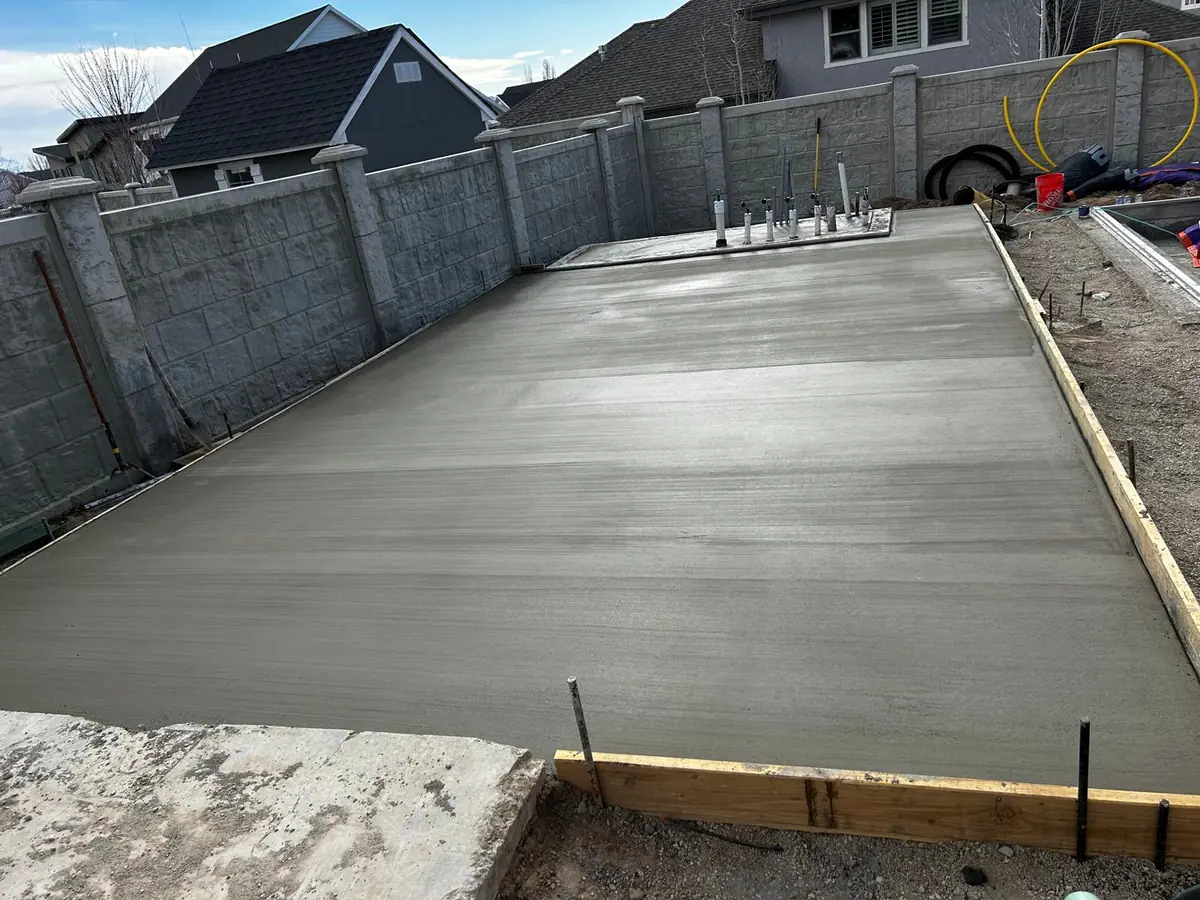
Wide concrete surface with broom texture and clean panel joints
Recommended Depth 5" to 6" Reinforced Concrete
Subgrade Base 4"-6" Compacted Crushed Base
Surface Texture Medium-Broom Traction Finish
Primary Coverage Davis & Salt Lake Counties

Base, thickness, reinforcement, drainage and use-after-pour instructions are set for each project. Any examples on this page are planning context, not a standard specification for every site.

PLANNING FOR THE LOAD

Stop parking heavy rigs on soft lawn and gravel.

Parking a 10,000 to 25,000-pound motorhome, boat trailer, or toy hauler on grass or loose gravel creates constant headaches. Tires sink into mud after winter snowmelt, weed growth overtakes the gravel, and trailer tongue jacks sink unevenly into soft subgrades.

Standard 4-inch residential driveway concrete isn't designed for sustained heavy axle point loads. At Concrete Plus Contracting LLC, we plan RV pads around the vehicle loads, required reinforcement and a suitable compacted base.

Whether you need a full 40-foot parking pad along your side yard, a driveway wing expansion with angled transition flares, or reinforced concrete approaches through an access gate, our crew builds flatwork that handles heavy loads year after year.

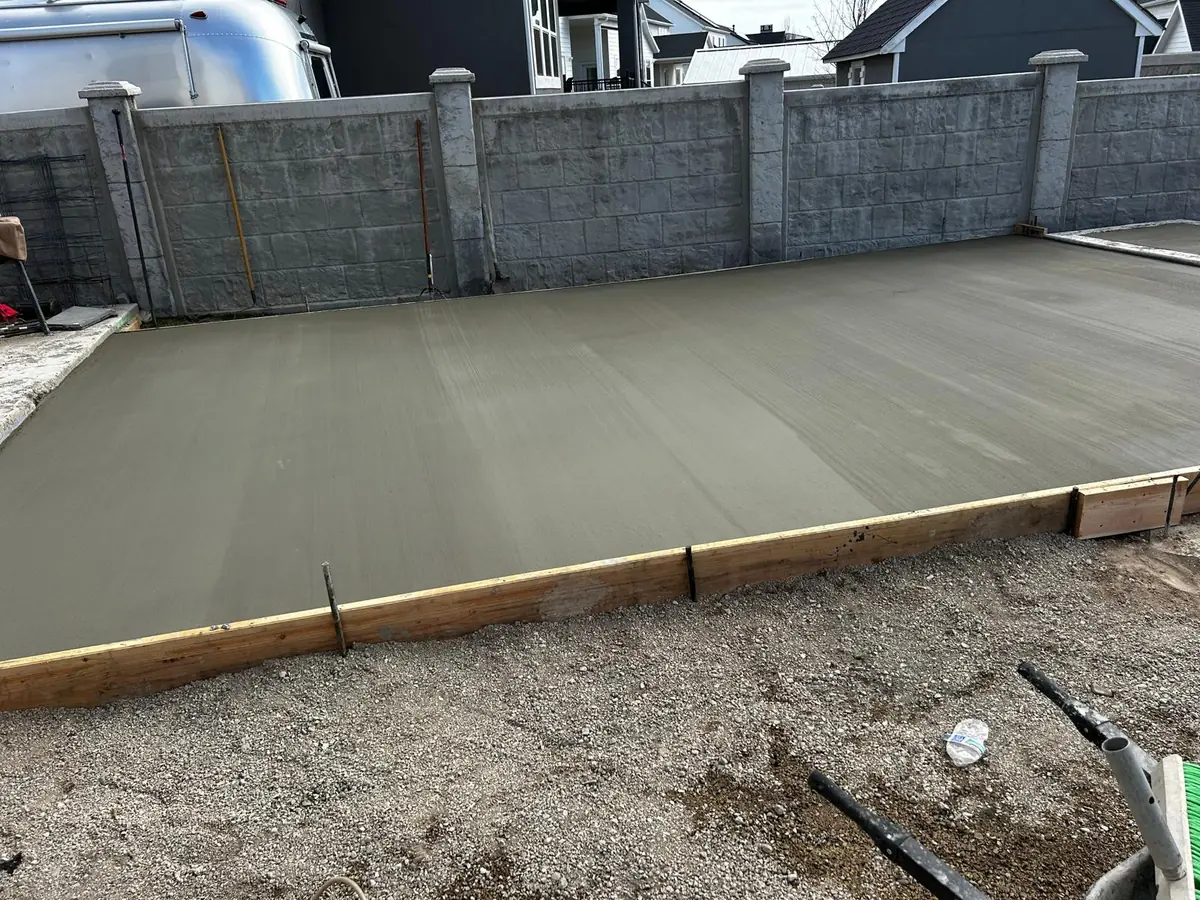
Concrete slab with straight forms beside a fenced yard
scene: Reinforced parking flatwork with clean broom finish and tooled joints.

Material & design inspiration. Photography is an visualization.

Parking Pad Options

Configurations tailored to your vehicles.

We evaluate your vehicle dimensions, trailer hitch styles, and property boundaries to build a pad that makes parking and loading effortless.

Heavy-Duty Standard

5" to 6" Heavy Vehicle Slabs

Poured with #4 steel rebar or structural fiber reinforcement over a compacted gravel sub-base. Engineered to withstand high wheel point loads, hydraulic leveling jacks, and multi-axle trailers with specifications selected for the intended loads.

Driveway Extensions

Seamless Driveway Tie-Ins

We review the condition and levels of the existing driveway before specifying the connection, isolation details and transition to a new parking area.

Side Setbacks

Side-Yard Pads & Gate Approaches

Transform unused side lawn into clean parking space. We grade slopes, build flared transitions at the gate, and install expansion isolation joints against foundation walls.

Utility Integration

Utility Hookup & Cleanout Accommodation

Forming flatwork cleanly around sewer dump cleanouts, water hydrants, and 30/50-amp electrical pedestal pads for effortless at-home RV maintenance and preparation.

Installation Steps

How we prepare and pour heavy-duty pads.

Heavy vehicles require rigorous groundwork. Here is our sequence from site evaluation to final broom finish.

01 Evaluation

Vehicle Specs & Turning Radiuses

We evaluate your trailer length, axle configuration, slide-out clearance, and street backing angles to determine the optimal pad width and length.

Key PrioritySufficient width for slide-outs & walking space
02 Clearance

Side Setbacks & Utility Locates

We check property setbacks, side-yard gate clearance, overhead eaves, and underground sprinkler lines before equipment excavation begins.

Key PrioritySprinkler line protection & setback compliance
03 Groundwork

Deep Excavation & Base Compaction

Topsoil and sod are stripped away. We install 4 to 6 inches of crushed gravel road base and mechanically compact it with heavy vibratory plate tampers.

Key PrioritySolid sub-base to prevent wheel ruts
04 Forms & Steel

Thickened Edges & Rebar Grid

Forms are staked straight to laser grades. We dig thickened perimeter edges along vehicle tire paths and tie a grid of deformed steel rebar on support chairs.

Key PrioritySuspended steel grid in the slab center
05 Placement

5"-6" Pour & Consolidation

High compressive-strength ready-mix concrete is poured, consolidated around steel reinforcement, screeded flat, and floated with positive drainage slopes.

Key PriorityFull thickness across the entire footprint
06 Finishing

Traction Broom & Joint Sawing

We apply a durable medium-broom traction finish for wet-weather grip, tool clean border edges, and saw-cut control joints to relieve curing stresses.

Key PriorityNon-slip tire grip & planned relief joints

Planning Factors

Key variables for an accurate RV pad estimate.

We evaluate these practical site details to ensure your estimate is tailored to your vehicle and property.

Vehicle Weight & Trailer Length

A 20-foot boat trailer requires different slab dimensions and concrete thickness compared to a 42-foot fifth wheel with hydraulic leveling jacks.

Side Yard Width & Gate Clearances

We check that fence gates and property boundaries leave comfortable walking room on both sides of the vehicle with slide-outs extended.

Street Access & Turn Flare Angles

Tight residential streets often require an angled concrete approach flare where the pad connects to the driveway to make backing in simple.

Subgrade Soil & Slope Drainage

Wasatch Front clay subgrades require deep aggregate base compaction. Concrete must slope at least 1/8" per foot away from the house foundation.

Sprinkler Lines & Underground Utilities

Existing sprinkler heads and irrigation valves in the side lawn must be identified, capped, or rerouted before excavation begins.

Driveway Connection Method

Connections to existing concrete need a site-specific detail based on the condition, levels and expected movement of both surfaces.

Practical Questions

RV & boat pad questions, answered.

Here are answers to common questions about concrete parking pad thickness, sizing, and curing time.

How thick should a concrete RV parking pad be?

RV axle weights, leveling jacks, trailer supports and subgrade conditions affect the slab design. Share your vehicle information so thickness, base and reinforcement can be reviewed for the intended loads.

Can the pad connect directly into my existing concrete driveway?

We inspect the existing driveway before recommending a connection or isolation detail. Dowels are one possible detail where suitable; they do not guarantee that adjoining slabs will move identically.

How soon can I park my heavy RV or boat trailer on the new concrete?

Use the pad only after the release provided for your specific pour and vehicle loads. Heavy vehicles and concentrated jack loads require particular care; a general website timeline cannot confirm readiness.

What pad width do you recommend for an RV or boat?

Measure the complete vehicle setup, including doors, slide-outs, steps, access for loading and the turning approach. We can discuss the proposed footprint and property constraints during a site review.

What happens to my side-yard sprinkler system during excavation?

Identify known irrigation lines, heads and valve boxes before excavation. Protection or relocation needs should be discussed and included in the agreed scope.

What information helps you provide a quick RV pad quote?

Share the vehicle or trailer type, its loading information if available, desired dimensions, project city and photos of the access route.

Complementary Work

Pair your new RV pad with front driveway replacement, site demolition, or connecting pathways.

Get a free estimate

Plan your RV or
boat parking pad.

Tell us about your vehicle dimensions, property access, and preferred timeline. Our family-owned crew will review your details and provide a straightforward quote.

Fields marked * are required. We use your details to respond to your request. Privacy information.