
Concrete & Asphalt Demolition
Breaking out failed driveways, old patios, sunken sidewalks, foundations, and parking aprons. We saw-cut clean perimeter borders and haul all rubble away for appropriate disposal or recycling.
GROUNDWORK & TEAR-OUT · BOUNTIFUL & SURROUNDING AREAS
Demolition, excavation, and site grading for your next concrete project. We tear out failed asphalt and cracked concrete, haul away debris, and build a compacted crushed aggregate base that ensures lasting flatwork.
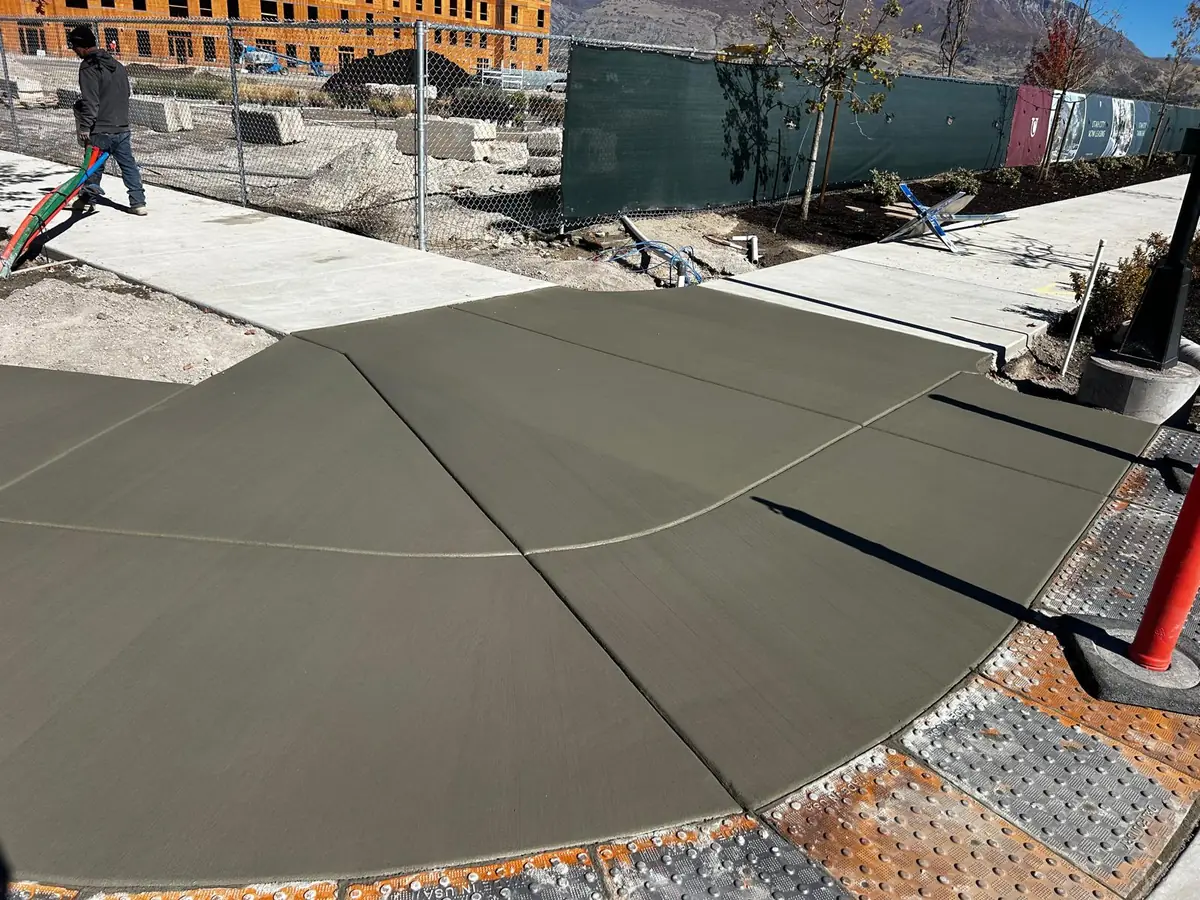
Base, thickness, reinforcement, drainage and use-after-pour instructions are set for each project. Any examples on this page are planning context, not a standard specification for every site.
The Critical Groundwork
No concrete pour—no matter how thick the slab or how rich the mix—can outlast an unstable subgrade. In Davis and Salt Lake counties, soils range from expansive clay to loose gravel. When failed asphalt or sunken concrete is replaced without correcting the underlying soil, new flatwork will inevitably settle and crack.
At Concrete Plus Contracting LLC, our demolition and site preparation services clear away the past and establish a rock-solid foundation for future pours. We use compact, rubber-tracked skid-steers and mini-excavators equipped with hydraulic breakers to remove old concrete cleanly without damaging adjacent structures.
All demolished material is loaded onto trucks and hauled to appropriate disposal or recycling facilities. We then excavate unstable organic topsoil, laser-grade slopes to ensure positive drainage away from buildings, and install machine-compacted road base ready for formwork.
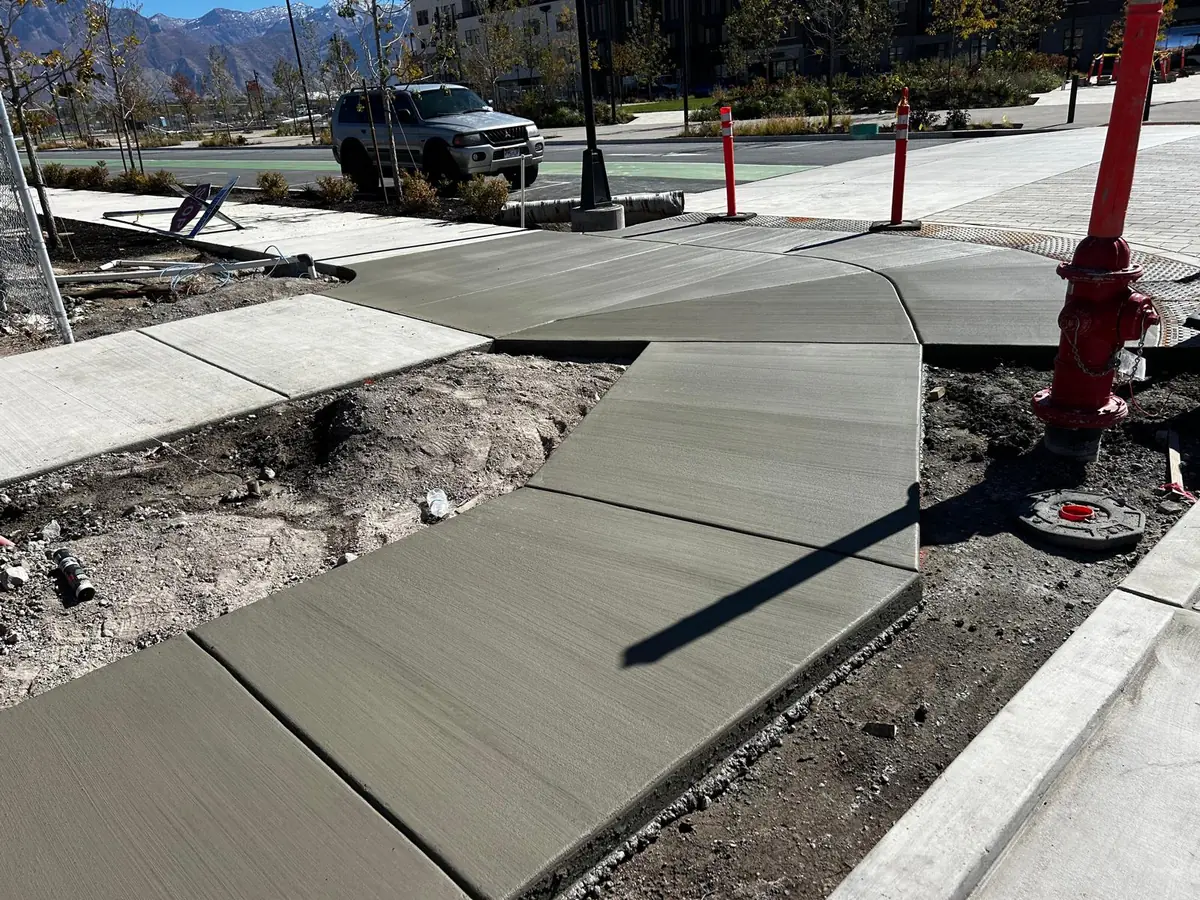
Material & design inspiration. Photography is an visualization.
Demolition & Prep Scope
Whether as part of a full turnkey concrete project or as standalone preparation, we leave your property clean, graded, and solid.
Breaking out failed driveways, old patios, sunken sidewalks, foundations, and parking aprons. We saw-cut clean perimeter borders and haul all rubble away for appropriate disposal or recycling.
Excavating lawn, topsoil, and tree roots to achieve proper subgrade depths. Laser-grading slopes to plan drainage routes away from home foundations.
Importing specified crushed aggregate crushed aggregate base and spreading it in uniform lifts. Machine compaction helps achieve the required base condition and helps support the slab under the planned loads.
Clearing unwanted landscape rock, deteriorated wood decks, vegetation, and overgrown roots to open up clean, buildable square footage for new flatwork.
Work Sequence
We work methodically to protect underground utilities, fences, and surrounding landscaping throughout the demolition process.
We confirm Utah 811 utility markings for gas, power, water, and fiber optics. We inspect equipment access pathways through side gates to minimize lawn impact.
Perimeters are saw-cut to create crisp border edges. Hydraulic breaker attachments break old slabs into manageable sections without jarring adjacent foundations.
Broken concrete and asphalt are loaded into dump trucks and transported to regional recycling centers where old aggregate is crushed for reuse.
We excavate spongy organic topsoil, weed roots, and unstable clay layers down to firm native ground, establishing exact elevation depths for new base.
We import specified crushed gravel road base, spread it in consistent lifts, and check grade lines with optical laser transits to ensure 1/8" to 1/4" drainage fall per foot.
Heavy mechanical vibratory plate tampers make multiple passes across the entire base layer, consolidating gravel into a dense, unyielding subgrade ready for forms.
Estimate Variables
We evaluate these practical factors to provide a transparent, itemized estimate with no surprise dump or machine fees.
Unreinforced 2" asphalt requires different machine time and breakout labor compared to 6" commercial concrete tied with heavy steel rebar.
Total volume determines the number of dump truck hauling trips, landfill recycling weight fees, and tons of new gravel road base imported.
Direct street access allows larger loaders. Backyard projects with 48" gate limits require compact mini-excavators or motorized rubber-track buggies.
Wasatch Front clay soil pockets that retain water may require deeper excavation and thicker gravel sub-base stabilization.
We locate buried irrigation manifolds, landscape lighting, and gas lines, hand-digging around sensitive areas to prevent utility disruption.
We coordinate grading elevations specifically for the intended future slab—whether a 4" walkway, 5" patio, or heavy 6" RV parking pad.
Common Questions
Here are answers to common questions about concrete tear-out, dump fees, and base preparation.
Yes. Discuss the removal limits and what should remain when the work is complete. The estimate can identify demolition, haul-off and preparation separately from any new pour.
We review the removal boundaries, adjoining structures and access route before work. Saw-cutting, equipment choice and protection measures depend on the actual site; demolition is not risk-free.
Ask for haul-off and disposal items to be stated in the written estimate. Access, material type, volume and any unexpected conditions can affect the scope and cost.
A suitable prepared base helps support the planned slab. The type, depth, drainage and compaction requirements depend on the soil, intended use and project specifications.
We review the removal boundaries, adjoining structures and access route before work. Saw-cutting, equipment choice and protection measures depend on the actual site; demolition is not risk-free.
Share the location, rough area, existing material, any known thickness or reinforcement and photographs of machine access routes. A site review helps define the work.
The Next Step
Once your site is excavated, graded, and compacted, explore our primary concrete installation services.
Get a free estimate
Tell us about your demolition square footage, existing material, and timeline. Our family-owned crew will review your details and arrange an on-site visit.